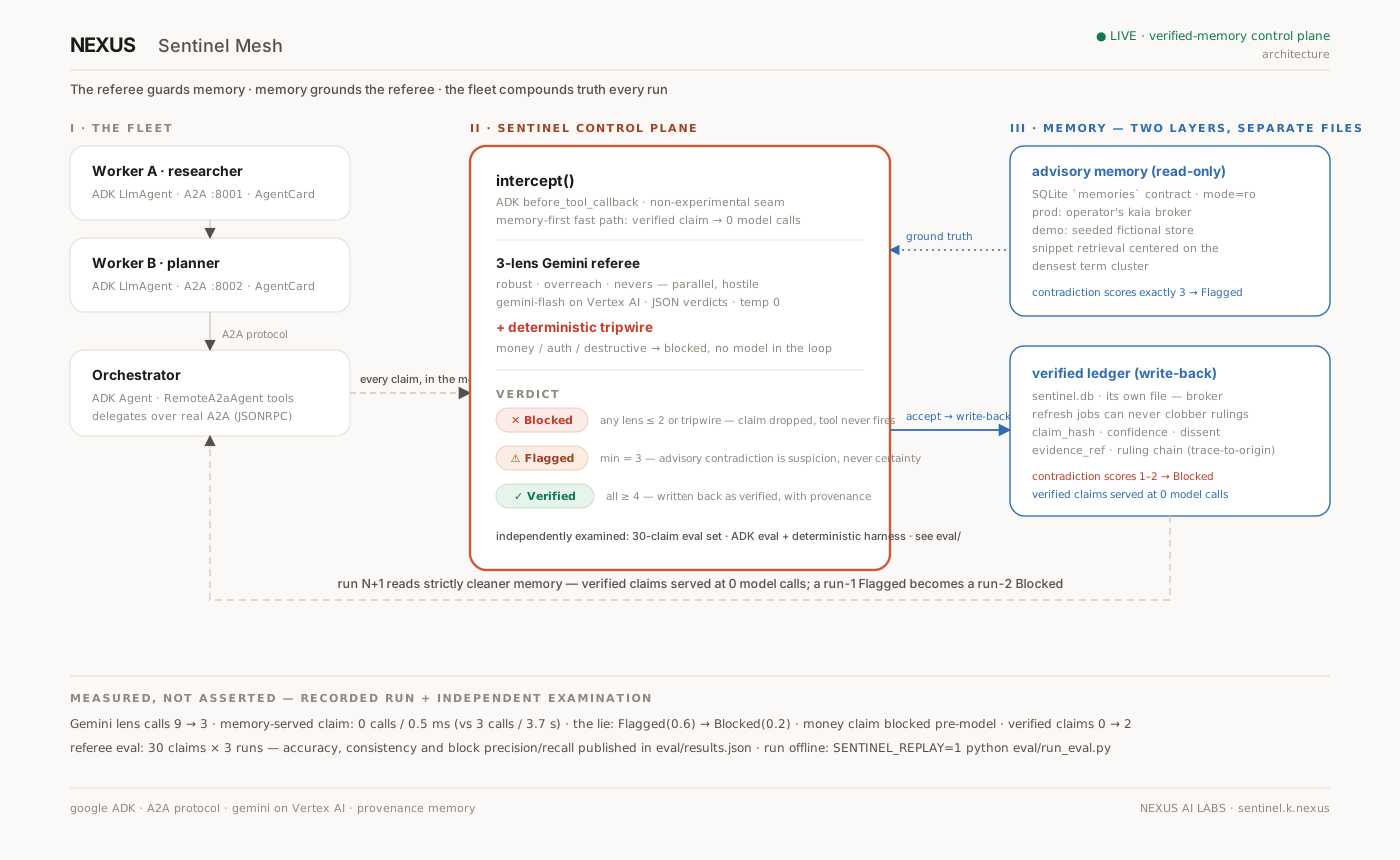
The whole design exists to put one adjudication seam between an agent's claim and the tool that would
act on it.
ADK / A2A workers
Real LlmAgent workers exposed over A2A with to_a2a() and live AgentCards; the orchestrator
delegates as a RemoteA2aAgent. This is a genuine multi-agent fleet, not a single prompt.
The veto seam — before_tool_callback
The non-experimental ADK hook where returning a dict skips the real tool. This is the one seam that makes an
in-path veto possible: a vetoed claim's tool never fires.
3-lens Gemini referee (Vertex)
Three adversarial lenses — robust, overreach, nevers — judge the claim in parallel at
temperature 0, returning JSON verdicts against memory as ground truth, with retry / backoff.
Deterministic tripwire
A regex word-boundary gate that hard-vetoes money / auth / destructive claims with no model in the loop —
the place a confident hallucination is most expensive.
Advisory memory (read-only)
Any SQLite store with a memories table. Agreement supports a claim; contradiction caps at a flag.
Curated context, never a hard veto on its own.
Verified ledger (write-back)
sentinel.db — its own file, so broker refresh jobs can't clobber rulings. Provenance-tracked accepts
ground the next run, and re-serve at 0 model calls.